Monday, June 23, 2014

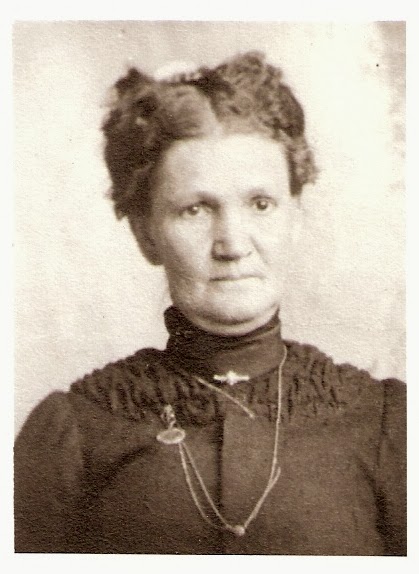
Lydia Partridge (1830-1875)

Lydia Partridge
Lydia was the sixth child of Edward Partridge and Lydia Clisbee. She was born at Painsville, Ohio, May 8, 1830, just one month and two days after the organization of the church. Her early life was during the days of severe persecution of the Church. She knew the price of believing in the true Church of Jesus Christ of Latter-day Saints.

She saw her kind and loving father dragged from his own home and family to be abused and falsely accused, finally to be tarred and feathered and cruelly treated at the hands of bitter enemies of all the leaders of the church.

Her father died as the result of persecution when Lydia was 10 years old, leaving the family bereft, homeless and destitute. She learned in her very early years a lesson that was to stay with her all of her life, that the Gospel was indeed a "Pearl of Great Price."

After the death of her father, Lydia's mother went into the home of Brother William Law, who took care of the family until the home which Edward Partridge had started for his family could be finished. Brother Law and his family were very kind to the Partridge family. They helped to take care of Lydia and her sister Eliza who were both very sick. In about three weeks they were about to move into their own house.

Lydia moved as a very young child as the family was driven with the Saints from place to place, leaving dear familiar places and things.

Lydia left the city of Nauvoo on the 9th of February, 1846. All the family was together except Emily and Mr. Huntington. "While in the midstream the ice came down in large pieces and threatened to sink our boat, but at this time, as at many other times, we were perserved by the Power of God." (Eliza's journal.) Lydia was sixteen years of age. She and her younger brother Edward, stayed with their mother and her husband. They started across the plains with others who were moving west but stopped at Mt. Pisgah where Mr. Huntington died. The family stayed the better part of a year at Mt. Pisgah before they were able to go on to join the others of the family at Council Bluffs. They stayed at Council Bluffs for more than a year before they started to the mountains. They left for the Salt Lake Valley in the summer of 1848, traveling in company with Amasa M. Lyman and his wives, Eliza and Caroline and quite a number of the Saints. They had provisions enough to last a few months after they arrived in the valley but not enough to last until another harvest. Lydia Clisbee Partridge's wagon traveled next to Amasa Lyman's. They reached the valley October 17, 1848.

Lydia lived in Salt Lake City with her mother until she married Amasa M. Lyman as his 8th wife February 7, 1854. She was twenty-four and he was forty years old.

Lydia continued to live with her mother in Salt Lake. Her first child, Edward Leo was born January 4, 1857, at Salt Lake while his father was trying to keep the Mormon colony going in San Bernardino. It was a year of extreme poverty and trouble for the church as well as for Amasa's wives.

Lydia and her family were moved to Fillmore, Millard County, Utah, about 1864 where Amasa was endeavoring to establish his families so that he could better care for them, be with them, and give them an education.

Lydia and Amasa had four children, Edward Leo, born January 4, 1857 in Salt Lake City; Ida Evelyn, born March 28, 1859; Frank Arthur, born September 7, 1863, and died 26 April 1864; and Lydia Mae, born 1 May 1865 at Fillmore, Utah.

While Lydia lived in Fillmore she provided for herself and family any way she honorably could. She was a good seamstress and did much sewing. She was an expert in working with buckskin, making moccasins and gloves which she sold. Her son, Edward, used to go out on the cedar mountains north of Fillmore and set cedar stumps on fire which burning to the ground left charcoal which he would go back and get later to see to the blacksmith for a meager sum.

The Partridge women stayed close together and helped each other.

Lydia had been in poor health nearly all her life. AS early as 1851 she had a siege of rheumatism, which bothered her much of her life.

When Amasa left the Church the Partridge women left him. They had married him because of a principle of the Church which they believed in and when he no longer was a member of the Church they could not live with him.

When Lydia was only 44 she took sick, unable to help herself, unable to raise her hand to her head and in such pain that she could not be touched and had to be moved on a sheet. She was tenderly cared for by her son Edward, who was then 18, and by her daughter Ida Evelyn who was 16. They would take their turns sitting up with their mother during the long nights. After sixteen weeks of painful illness, Lydia passed away, January 16, 1875 and was taken to Fillmore, Millard County, Utah to be buried. She was the only one of Amasa's wives to be buried by his side.

SOURCE:
The Edward Leo Lyman & Mary Maranda Callister Lyman Family 1984, compiled by Mary Lyman Henrie, p. 1c-1d.
Descendancy
Lydia Partridge
Edward Leo Lyman
Lydia Lyman
Richard Lyman Finlinson
Diane Finlinson

Monday, June 16, 2014

Obituary of Edward Leo Lyman

Edward Leo Lyman
Prominent Millard County Citizen Who Answered to the Call of Death on Tuesday of This Week

For the fourth time within the past few weeks death has visited the Lyman family, and brought sorrow and desolation to its members. Prior to that the calls of the grim messenger had been very infrequent for a long period and there was general rejoicing among all concerned. It would almost seem that there is now to be a reminder that no one can remain safeguarded indefinitely against such incursions and that death may be near or remote, and that it comes ofttimes when least expected.

The victim this time is Edward L. Lyman, a sterling citizen of Oak City, Millard County, and at one time a resident of Salt Lake. The deceased was a brother of Francis M. Lyman, and was a man of highest principle and upright character: one who acted on the theory that if he were called upon to go a mile he would go two, or if he were smitten on one cheek the smiter might have the privilege of striking the other, unless the blow were literal and struck the arm and hand of malice with intent to injure. Then he was a very lion who would resist wrong to the limit. Altogether he was a good citizen and one whose presence, advice and work will be missed in Millard County in the days to come.

The deceased died at Oak City, Millard County, Utah, May 22, 1906, of pneumonia, after an illness of 10 days. He was a native of Salt Lake, and was born Jan. 4, 1857. His parents were Amasa M. and Lydia Partridge Lyman. When Edward was seven years of age he removed with his father’s family to Oak City, and there the greater part of his life was spent. For eight years he lived at Salt Lake City and in Ogden, where he was a trusted employee of the Cooperative Wagon and Machine Company. Nine years ago he returned to Oak City, and there made a permanent home.

On the 14th of November, 1878, he married Mary Maranda Callister, daughter of Thomas and Caroline Smith Callister, and 10 children were the issue of their union. Six children, the youngest of whom is eight years old, are living; and, with their mother, morn the death of the departed one.
Mr. Lyman was a public spirited man and took a prominent part in all things that pertained to the welfare of the community in which he lived. He was esteemed as wide-awake, honest and thoroughly reliable in every walk of life. At one time he engaged in the lumber business in partnership with some of his brothers. Three times fires destroyed their mills and other property, until finally the venture failed. The brothers then went to work for daily wages and out of their earnings paid every dollar of their obligations. In later years Mr. Lyman was employed in mercantile pursuits, and had built up a very prosperous business.

In ecclesiastical work Mr. Lyman always took a prominent part, and at the time of his demise he was an alternative high councilor and home missionary of the Millard Stake.


The funeral of Mr. Lyman, which occurred at Oak City on May 23, was largely attended. Bishop Anderson, Counselor George Finlinson, Elder Joseph Finlinson and President Francis M. Lyman eulogized the life and labors of the departed, and spoke words of comfort and consolation to the bereaved family and friends.


SOURCE:
The Edward Leo Lyman and Mary Maranda Callister Lyman Family 1984, compiled by Mary Lyman Henrie, p. 19-20.

Descendancy
Lydia Partridge
Edward Leo Lyman
Lydia Lyman
Richard Lyman Finlinson
Diane Finlinson

Monday, March 17, 2014

Archibald Gardner Bio

Archibald Gardner
Son of Robert and Margaret Calinder Gardner

History - ARCHIBALD GARDNER was one of Utah's earliest entrepreneurs, made history in the state of Utah as a mill builder, canal builder, irrigation developer, bridge builder, bishop and as husband to 11 wives, father of 48 children and grandfather to 201.

Archibald, born in Scotland, immigrated to Canada as a young man. There he built his first mill. There he met and married his first wife, Margaret. Together, they traveled with Utah's early pioneers, crossing the plains from Missouri River to the Great Salt Lake Valley, arriving there in 1847.

In his lifetime, he built more than 36 mills, as well as canals and bridges. He was also instrumental in the building of the Salt Lake Temple. Gardner provided the valley with valuable irrigation water through his canals.

In 1858, in the face of the threat of Johnston's Army and the Utah War in the Valley, he and his family moved to Spanish Fork, consisting of nine wives, fifteen children, seven step-children and an adopted Indian girl, Fanny. Archibald left behind a homestead at Mill Creek, the mills in the canyon above, a grist mill and carding machine on the Big Cottonwood stream, a grist mill and saw mill on the Jordan River, and the "big hay field" of about 1,000 acres in the river bottoms in the southern end of Salt Lake Valley. Archie began to build a large home for his family in Spanish Fork. However, in 1859, he was called to return to the Valley as bishop of the West Jordan Ward, a position he held for 32 years being released in May of 1891.

Archibald built the original mill in West Jordan in 1853. In 1877 the mill was dismantled and moved to Fairfield. Archibald then built what he referred to as a "bigger and better" mill on the West Jordan site, with a stone basement. Surrounded by a mattress factory, a broom factory and a blacksmith shop, the flour mill became the center of activity in the area. A general store was located just west of the mill (where the Gardner Monument now stands) and supplied goods to settlers from miles around.

He also built the Red Rock Church, which is still standing, near his mill starting construction in 1861. People were poor, and when it was ready for roofing, the money was gone. It was decided to hold a ball as a fund raiser. A tarp was stretched overhead and officers from Fort doublas arrived in uniform adding a military touch. Many church officials were present including President Brigham young and George Q. Cannon. The church was completed in 1867.

Archibald served two terms in the territorial legislature and was also instrumental in the discover of ore in the area. The first location claim in Bingham Canyon is signed by Gardner, Ogilvie and others. The document is dated Bingham Kanyon, Sept 17, 1863.

In 1886 he spent several months in Mexico to escape the federal marshals, who were on the trail of polygamists. In 1889 he moved to Star Valley, Wyoming, to escape the persecution. From this time his family were spread across three locations - Spanish Fork, Utah; West Jordan, Utah; and Afton, Wyoming.

Each of Archibald's wives had a home and acreage in West Jordan. Some of those houses are still standing. There are more than 20,000 descendants of Archibald and wives, living in every state except Delaware and in 22 countries.

Excerpts from Eagle Newspapers, 17 Nov 1994 by Olga Milius
  1. Married Margaret Livington, 19 Feb 1839, Alvinston, Brooke Twp, Lambton, Ontario, Canada 
  2. Married Abigail Sprague, 19 Apr 1849, Salt Lake City, Salt Lake, Utah 
  3. Married Mary Ann Bradford, 26 Apr 1849, Millcreek, Salt Lake, Utah 
  4. Married Laura Althea Thompson, 26 Apr 1849, Salt Lake City, Salt Lake, Utah 
  5. Married Elizabeth Elinor Lewis, 20 Apr 1851, Salt Lake City, Salt Lake, Utah 
  6. Married Jane Park, 24 Aug 1852, Salt Lake City, Salt Lake, Utah 
  7. Married Serena Gahrsen Evensen, 26 Feb 1856, Salt Lake City, Salt Lake, Utah 
  8. Married Sarah Jane Hamilton, 21 Jun 1857, Salt Lake City, Salt Lake, Utah 
  9. Married Harriet Armitage Larter, 21 Jun 1857, Salt Lake City, Salt Lake, Utah 
  10. Married Elizabeth Dowding, 2 Mar 1867, Salt Lake City, Salt Lake, Utah 
  11. Married Mary Larsen, 20 Dec 1869, Salt Lake City, Salt Lake, Utah, Utah
Descendancy
Archibald Gardner and Margaret Livingston
Neil Livingston Gardner
Delila Gardner
LaVon Williams
Diane Finlinson

Margaret Livingston Bio

Margaret Livingston
Margaret was born on October 12, 1818 in Loch, Gilphead, Argyleshire, Scotland. She left Scotland to go to Canada with her mother and father when she was two years old. When Margaret was sixteen she worked in Detroit as a ladies' maid to earn money to give to her widowed mother. She would sometimes walk 200 miles back to Canada in order to save the stage fare.

Margaret met a Scotsman, Archibald Gardner, in Canada, fell in love and married him in 1839. She had three boys while living in Canada. Her last baby boy died of "bowel trouble." She buried him there. Her next baby born in Canada was a baby girl.

That same year Margaret and her husband were baptized into the Church of Jesus Christ of Latter-day Saints on February 11, 1845, while residing in Canada. The next year the Gardners decided to join the Saints in Nauvoo. They sold their property at a sacrifice price and left Canada. Margaret left her widowed mother, two of her three sisters and all four brothers in Canada.

They left Canada in 1846 to join the Saints in Nauvoo, but the Saints, by that time, had moved on to Council Bluffs. The family caught up with the Saints there and at the request of Brigham Young helped the families of the Mormon Battalion that were left behind.

They started for Zion in June, 1847, with Bishop Edward Hunter's Wagon Company. They arrived in the Salt Lake Valley on October 1, 1847 and five days later Margaret delivered a baby girl. She had driven her covered wagon with her two little boys in it while pregnant.

Margaret later moved from Salt Lake City to Mill Creek to Spanish Fork until 1865 and then to West Jordan.

Her husband's seventh wife stated, "Margaret was more like an angel that anyone she had ever known." Her flour bin, food, favors, and friendliness never seemed to be empty for family or strangers - including tramps who came and went.

By 1900, Margaret's descendants numbered over 1,300 with 14 sets of known twins.

BIRTH DATE: 12 Oct 1818, Loch Gilphead, Scotland
DEATH: 21 Sep 1893, West Jordan, Salt Lake Co., Utah
PARENTS: Neil Livingston and Janet McNear
PIONEER: 1 Oct 1847, Edward Hunter Wagon Train
SPOUSE: Archibald Gardner
MARRIED: 19 Feb 1839, Brooke, Kent, Canada
DEATH SP: 8 Feb 1902, Salt Lake City Salt Lake Co., Utah

SOURCE:
Pioneer Women of Faith and Fortitude, Vol II, F-L, International Society Daughters of Utah Pioneers, pages 1057-1058
Descendancy
Archibald Gardner and Margaret Livingston
Neil Livingston Gardner
Delila Gardner
LaVon Williams
Diane Finlinson

Friday, March 7, 2014

Samuel Cornaby and Hannah Last

Hannah Last
Hannah Last, born March 17,1822 at Beccles, Suffolk, England. She died September 1, 1905 at Spanish Fork, Utah. She had a great deal of poetic ability. She wrote an autobiography of her life and included the poems that she wrote. She was the author of the words of the Mormon hymn, ‘Who’s on The Lord’s Side? Who?” Her father, William Last was born in 1796 in Barsham, England and was the son of James Last and Eve Woods. Her mother, Hannah Hollingsworth, born in November 28, 1800 at Haggershall, Suffolk, England, was the youngest child of Samuel Hollingsworth and Lydia Goddard of the parish of Hoten. Samuel Hollingsworth was born October 25, 1757 and died April 19, 1810. Lydia Goddard was born September 20, 1761 and died August 18, 1832.

Descendancy
Hannah Last 
Edith Hannah Cornaby
Hannah Caroline Powell
Allen Berry Williams
LaVon Williams
Diane Finlinson

Thursday, March 6, 2014

Simeon Comfort and Edith Hannah Powell

A short history of Simeon Comfort and Edith Hannah Powell

Simeon Comfort Powell
Simeon Comfort Powell was married twice, the first time to a woman whose name was Lydia Hawley.  They had one child named Mary Lavina Powell, born December 10, 1864.  When Mary was about six months old, her mother took the baby and left her husband.  He followed her almost to the point of the mountain.  The child was reared by his mother, Mrs. James Powell.

A letter was received from Ogden a few years ago stating that Simeon C. Powell’s first wife had married at least twice after leaving him, had children by other marriages and then abandoned them.  Lot Powell received this letter from some of her family.

On June 13, 1943 William T. Williams and his son, Grant Griffiths searched through old records of the Salem Ward and found a record of Mary Lavina Powell’s baptism, which is as follows:  Mary Powell, daughter of Samuel C and Edith C. Baptized July 3, 1875 by Robert H. Davis.  Confirmed on same day by Soren P. Christensen.  An error in the name of the father as Samuel instead of Simeon appeared.

Edith Hannah Cornaby
Simeon Comfort Powell’s second marriage was to Edith Hannah Cornaby. In their early marriage they took William T. Williams as a baby, only seven months old and reared him until he was eleven years old.  His mother was ill and unable to care for him. 

William T. Williams said that when he was nine or ten years old, his step-father put Millie, Simeon and himself in the sled and took them to Aunt Laurie Jones’s on a visit.  They thought it rather unusual as it was a place they loved to play and usually they were spanked or corrected
 for staying so long.  While they were away on that visit, Hannah Caroline was born.  William T. Williams stayed there from January until some time in May.

The following children were born to them:  Edith Amelia, born March 21, 1874; Simeon James, born May 27, 1875; Hannah Caroline, born January 3, 1882; Samuel Marsh, born November 9, 1884; Alma Joseph, born October 18, 1887.

Simeon Comfort Powell was rather a rough man, not very affectionate, but in his early manhood was very industrious.  He owned several lots in Salem, Utah which he sold and bought hay land in the West Fields (in probably what is known as Palmyra now).  He homesteaded a ranch in Spanish Fork Canyon for summer range for cattle.  The family lived on the ranch in the summer and in Spanish Fork in the winter at Grandfather Cornaby’s.  After he had been married about twenty years, and when his daughter Hannah, was from eight to ten years old, he started to tamper with liquor, then he started to gamble.  Before his wife realized what was happening, she had signed papers which led to the loss of their hay grounds by his gambling.  After that the family lived all the time on the ranch in Spanish Fork Canyon.  He owned about 300 to 400 head of cattle, but with the loss of the hay to feed them and none available to buy, all but about ten head were lost.

He was quite the hunter and fisherman.  It was not unusual for him to go out in the morning and have a lovely mess of fish for breakfast.  He was a great lover of horses, although he abused them somewhat, unless it was a favorite.  He was very strict morally but suspicious of others.  He died at the home of his son, Samuel in Independence, Utah.
                                      
Edith Hannah Cornaby, mother of Hannah C. Powell was born March 3, 1852 at Yarmouth, Norfolk, England, and died February 12, 1913 at Spanish Fork, Utah.  

Descendancy
Simeon C. Powell (1842-1918) & Edith H. Cornaby (1852-1913)
Hannah Caroline Powell (1882-1947)
Allen Berry Williams (1905-2000)
LaVon Williams
Diane Finlinson

William "T" Williams

Hannah Caroline Powell

Hannah Caroline Powell
Hannah Caroline Powell went to school at Tucker, Utah.  The school was a house used for that purpose and situated in the middle of town.  Later, the Nebo School District built a frame building near the mouth of Indian Creek, where Hannah went to school with her brothers, Samuel and Alma and her sister, Millie (Edith Amelia).
A short history of the
William T. and Hannah Caroline Powell Williams Family
Related by W.T. Williams – Compiled by Delila G. Williams
June 14, 1943
William T. Williams and Hannah Caroline Powell

WILLIAM 'T' WILLIAMS and HANNAH CAROLINE POWELL were married December 25, 1900 at Tucker, Utah County, Utah by Justice of the Peace James H. Robinson.  J.W. Coburn and S.H. Cornaby were the two witnesses.

Our first children were twins. They were born December 9, 1901 in Tucker Precinct on the old Powell ranch, which is located one and a half miles northwest of Tucker in Spanish Fork Canyon. They were named ANN REES and EDITH LAST. Ann Rees died August 13, 1904, at the ranch of tonsillitis. 

THOMAS CORNABY was the next child, he being born April 17, 1904 on the upper ranch at the forks of Tie Fork. I bought a squatter’s right out and built a two-room house of sawed logs. Thomas died May 15, 1904. The cause of his death was thought to be spinal meningitis.

Our next child was another boy and he born June 8, 1905, at the old Powell ranch.  We named him ALLEN BERRY WILLIAMS. We chose the name Allen, as it was a fad then, but the Berry came from a friend of Grandfather Cornaby’s in England. 

Our next child we named DAVID CLARK. He was named after David T. Clark, the man who first encouraged me in life. Clark was born at the old Michael Barkley ranch which belonged to me at that time. He was born February 18, 1907.

SAMUEL CORNABY was the next child’s name. He was born at Tucker, Utah in the upstairs of the store which the family owned and operated. He was born March 7, 1909.

The next child was a girl. RUTH AMELIA was born July 1, 1911 at the old Powell ranch, which we owned at that time. While I was at Provo having Sam’s broken arm set, the baby was born.

GRACE EMILY was born at the Powell ranch May 13, 1913. It was when the D&RG Railroad was making a big cut in the mountains and they were using blasting powder to blast. We had to take Mother out in the field when the baby was only ten days or two weeks old, as we didn’t know what damage the blasting would do.

DORA C (initial only) was born May 30, 1915 at the Powell ranch. She died of inflammation of the bowels {now known as appendicitis} on October 2, 1916, at the ranch.

Our next child was a boy. He was born on September 16, 1917, at the Powell ranch. We named him GRANT GRIFFITHS. 

DORIS PEARL was born December 26, 1921 at Springville, Utah at the home of Mrs. George Tew. Mrs. Millie Martin took care of the mother and baby. The baby died December 29, 1923 of poisoning. Dr. Joseph Hughes opened her up but sewed her up again, as she was filled with the poison. She died a few hours later.

HANNAH WILLET was born at Spanish Fork, Utah at the Thomas Curtis home on Third South and Fourth East on April 23, 1925. Hannah was named after her mother and father.

Our children who have died are buried in the cemetery at Tucker, Utah.

At the present time, there are six of my children married. I have sixteen grandchildren – three girls and thirteen boys.                                                       
 Decendancy
William 'T' Williams (1871-1949) & Hannah C. Powell (1882-1947)
Allen Berry Williams (1905-2000)
LaVon Williams
Diane Finlinson

Keven John Stratton III (January 12, 2011 - August 20, 2011)

Baby Johnny
Dear Johnny,

Wow, what a ride you have taken us on this past year. It hasn’t been easy but I’m not sure I would change a thing. We knew from the beginning that you were a very special and different little boy. Your completely normal amniocentesis, the measly 12 lbs. I gained during your pregnancy and your full-term 2 lbs. 9 oz. birth weight showed that you didn’t like to follow any rules. You were determined to write your own story. The day you were born you beat all the odds. The doctors didn’t think you would live but not only did you survive, you thrived. You were soon known as the “rock star” of the NICU. Over time, your little body started struggling and you became known as “typhoid Mary.” It seemed as if every week we found out about some new issue that you had to deal with. Daddy and I used say, “At least we don’t have to work with such-and-such specialty” but we eventually stopped saying that because every time we did, we ended up working with that specialty.

Johnny, you are the strongest and bravest person I know. Even through all your troubles, you always had a smile ready and you seemed to enjoy the life you were given. I loved those days I spent with you singing, playing and having you sleep in my arms as I read. You had such personality. You loved your sister Eva, fuzzy blankets, stuffed bird toys, binkies, music, grass, your baby swing, the sound of running water, having people play with your hair, sleeping with your tiny hand on my chest and being held all the time. You disliked baths, needles, arm & hand stretches, tummy time, wind, rain and anytime we tried to read “touch & feel” books with you.

You captured the heart of everyone around you. Each day brought about 4 visitors to your bedside just to check up on you and see your glasses and your infectious smile. You even had someone ask me if they could put a picture of you on their Facebook profile. Right after you passed away, a nurse came in and exclaimed, “Aw man! My wife and I were planning to kidnap him and take him to New York to start our family!” You had 5 primary nurses that took care of us through most of your life: Pat, Susan, Angie, Chris and Ann. You loved them dearly and they loved you. You always did better when they cared for you. You were known to hold grudges against Susan when she took care of you during painful or uncomfortable procedures. She used to say, “Quick! Take his glasses off so he doesn’t know I’m here!”

Johnny, you are infamous. You have been in nearly every unit of Primary Children’s Medical Center. You have been seen by 11 different specialists. You have baffled every geneticist that has seen you. The IV team groaned every time your name was mentioned. I once heard a rumor that the glasses you wore were the smallest pair the Moran Eye Center has ever made.

Your life was a life full of miracles. In John 9:1-3 it says “And as Jesus passed by, he saw a man which was blind from birth. And his disciples asked him saying, who did sin, this man or his parents that he was born blind? Jesus answered, Neither hath this man sinned, nor his parents: but that the works of God should be made manifest in him.” Johnny, the works of God have been made manifest in you. You have influenced many. You have done more good in your short 7 months of life than many do in a lifetime.

My patriarchal blessing says that I will have the choicest of our Heavenly Father’s spirits to adorn my home and that my children will bring about much righteousness upon the Earth. You have made that prophecy come true. I feel honored that you have chosen me to be your Mother.

The scripture that will forever remind me of you is Mosiah 3:19 which invites us to “[become] as a child, submissive, meek, humble, patient, full of love, willing to submit to all things which the Lord seeth fit to inflict upon him even as a child doth submit to his father.”

Even though you never said a word, you have taught me many lessons about life and the Gospel of Jesus Christ. You have shown me the love and compassion of others. You have shown me that there is good in everyone. You have taught me how to face earthly trials with faith, joy and long-suffering. You have shown me the love our Heavenly Parents have for their children. You have taught me how to submit my will to the Lord. You have taught me of the power of Christ’s Atonement and how to place my burdens on the Lord so that I cannot feel them upon my back. You have taught me the power of prayer and of Priesthood blessings. And most important, you have taught me about the eternal nature of the family. The blessings of the temple are real. They are not just a nice thought, they are real. This is the purpose of our earthly life, to be sealed for time and all eternity so that we can always be a family, no matter what happens on Earth. Johnny, we are going to be together forever. Nothing can take that away from us. As your sister Eva so sweetly said, “My family is going to be together forever and I don’t have to cry about it.”

I am sad that you are no longer here with us but it makes me happy that you are free from the pains, frustrations and evils of this world. I find it fitting that a butterfly was placed on your door shortly after you passed away. You were a tiny caterpillar, trapped in an imperfect body but now you are a beautiful butterfly, free from all pain and suffering.

I miss you so very much. I hold onto the hope of raising you during the Millennium. I look forward to the day when I can be with you again. I cannot wait until you can draw on my walls, track mud through my house and collect rocks and bugs like little boys often do. I can’t wait to see your sweet smile again and hear your laugh. Thank you for choosing me to be your Mother. I love you forever.
Love, Mommy


Source:
Written by Johnny's mother, Macie (Finlinson) Stratton after the death of her sweet baby.

Jemima Powell Bio

Jemima Wimmer
Jemima's family was living in Hamilton County in Ohio at the time of her birth. Jemima married James Powell in Henry County, Indiana.They became members of the Church of Jesus Christ of Latter-day Saints and loved working on all church assignments. They were also called upon to make many moves with other members of the Church and experienced terrible persecutions through Missouri and Nauvoo.

Her husband, James, was beaten on his head with a gun by a mobster in Randolph County, Missouri. This left the left side of his body paralyzed and he suffered from seizures the rest of his life. Her eighth child was long four months old when they began their journey across the Plains with the Robert Wiemer Wagon Company*. They arrived in Salt Lake on September 15, 1852. (see Note)

They moved to Ogden where her ninth child was born. James was crossing the Weber River on his horse when he took a seizure, fell off his horse, and was drowned. They found the body the next day and Jemima had him buried in Ogden Cemetery.

Jemima took her children to Springville to be near her parents. After her mother died, she moved up to Summit County where she lived with her son, John Ammon.

Jemima served as midwife and nursed the sick when called upon. She loved to cook, sew, and help people. When they were having trouble with Indians in Summit County, she moved her children to Salem, Utah.

Her greatest attribute was her ability to overcome trials she had to endure in her life. She served her church faithfully and was a visiting teacher until her death.

Near the end of her life, she had moved to Price to be near her children, so her death occurred in Price, Utah. She was buried in the Salem Cemetery.


Note: *The James Powell family were among the known individuals to travel in the Robert Wimmer Company, arriving in Salt Lake on September 15, 1852. 230 Individuals and about 130 wagons were in the company when it began its journey from the outfitting post at Kanesville, Iowa (present day Council Bluffs) in early July.(Link) See Mormon Pioneer Overland Travel

Descendency
Jemima Wimmer (1809-1954), wife of James Powell
Simeon Comfort Powell (1842-1918)
Hannah Caroline Powell (1882-1947)
Allen Berry Williams (1905-2000)
LaVon Williams
Diane Finlinson
Source:
Pioneer Women of Faith and Fortitude, Daughters of Utah Pioneers, p. 2436.

Incidents in the life of James Powell

One day while we were living in Caldwell County, Mo. We were visited by what might be termed a mob, composed of the following persons: Arthur F Wethers, John Gardener, Riley Sanders, Clark Ellis and Philon Ellis; requesting my husband to join the forces against the Mormons.  He told them that if they had no Federal Authority to molest them he could not go.  They replied warningly, “If you do not join us we will kill you.”

Following this they went in the direction of my father’s home.  Fearing for the safety of our small daughter, who at the time was at my father’s place, we followed them, little knowing what might occur.

As we were about to overtake them, they stopped and ordered us back, my husband said we were going after our little child.

At this remark three of the men sprang from their horses, and one a Mr. Wethers, caught up a stick and struck my husband between the shoulders, causing him to turn around and grapple with Wethers, who then shouted for help.  Gardener shot at my husband, missing him, and not wanting to endanger a fellow posseman, Gardener then used his gun as a club and struck him on the head several times.

I ran for help, but as the posse left I ran and lifted my husband’s head, thus relieving his pain as best I could until my mother (Elizabeth Shirley Wimmer) and two sisters came to my assistance.  They were Latter-day Saint so they immediately administered to him by laying on of the hands.  After they had administered the ordinance he arose and walked to my father’s (Peter Wimmer) house about two hundred yards away.

When they left they gave us warning that if we were not out of the place by the time the sun was a yard high the next morning they would return and kill all of us.

Thinking that these fiends might return and carry out their hellish threats we decided it was best to leave.  We packed up our things in the wagon and started that very night for Huntersville (a town about four miles away).  We arrived there the next afternoon after driving all night through the wooded country; being followed by the posse who were determined to see us well out of the country.

Upon our arrival in Huntersville we were immediately surrounded by a crowd of three hundred men.  They asked us what we had in the wagon.  I replied, “If you must know, we have a wounded man in the wagon.”  They then asked if we had done anything for him and if we were Mormons.  We had done very little for him and neither one of us was a Mormon, and had never heard a Mormon preach.  One of the men then told us to go to a certain vacant house, arriving there they took my husband out of the wagon, laid him on a door and the Doctors performed an operation on his head.  They cut his scalp in four parts, drew down as far as his ears and forehead.  Then thinking we would tell the posse they left him in this condition.

During my husband’s illness nearly one fourth of his brains were taken out.  The Doctors were showing them to some persons who were present, when my husband requested to see them.  They were handed to him.  He seemed to scrutinize them closely and then threw them into the fire, remarking, “There is a miracle for you: (A man holding his own brains in his hand and then throwing them into the fire! and living to see them burn!).

We were transferred to the Doctor’s office; where we remained for nine weeks and by the time he was able to walk around the office we were moved about a mile and a quarter out of town.  While we were staying at this place he complained of a severe pain in his head.  I prepared to go to the Doctor, but he objected saying I could do just as well.  I worked at the wound in his head until I could work my fingers the whole length of it and removed pieces of bone from the size of a grain of wheat, to a piece on inch long and inch and a half wide, about sixty pieces in all.  Of this fact there are many who can bear witness.  Previous to this the Doctor had also taken out about fourteen pieces.

We moved from this place to a house still further out of town, and during our stay here we were presented (by ten men) with a written agreement saying that if we would agree to leave, the state would support us.  This we refused to do.  I told them I was an American Citizen and knew my rights and I wanted those men who had ruined my husband to be dealt with according to law and justice, but they said it couldn’t be done.

My husband and I walked; I carried my three year old daughter in my arms and led a heifer.   It rained six days in succession and when we arrived at Salt Creek, it was very high.  I got a man to take my husband and child across in his wagon. He refused to take me, but I was determined to go and just as the wagon entered the stream I managed to get on top of the bows, and in this way I got across without any of them knowing it.

We traveled on until we arrived at Mt. Hope, Adams Co., Ill., where my brother Robert Wimmer lived.  (We lived with father).  After we had been there some time our little three year old girl died.  We remained in Mt. Hope about eighteen months, then moved to Green Plains, Hancock, Ill.  From there we moved to Nauvoo, where we stayed until the Saints were driven out.


We then moved to Harris Grove, twenty miles north of Cainsville and from there we came to Salt Lake City; arriving on Oct 1, 1852.  We traveled on to Ogden, about forty miles north of Salt Lake City; where we made our home.  We owned a farm on the opposite side of the river, and one day when my husband was crossing over, he was caught in a fit and being alone he fell into the river and was drowned.  His body was found the next day and was buried.

Mrs. James Powell
Springville City. UT Feb. 1860

Descendency
James Powell (1809-1854), husband of Jemima Wimmer
Simeon Comfort Powell (1842-1918)
Hannah Caroline Powell (1882-1947)
Allen Berry Williams (1905-2000)
LaVon Williams
Diane Finlinson
Source:
(This story of James Powell was written in the handwriting of Jemima Wimmer and was found in an old family record book of Peter and Elizabeth S. Wimmer in the possession of Robert Wimmer, a grandson of afore mentioned Robert Wimmer)

Tuesday, March 4, 2014

George Finlinson Bio

George Finlinson (1835-1909)
Sketch of the Life of George Finlinson, A Utah pioneer of 1864, by Angie F. Lyman.

GEORGE FINLINSON, my grandfather, was born in West Curthwaite, England, on January 23, 1835. He was the son of Mary Tomlinson and Joshua Finlinson. Joshua Finlinson was a clerk to a priest in the Church of England. 

When but a small boy, grandfather went to live with a rich uncle who had no children. They wanted him to be their heir and take care of the estate. They willed all their property to him. This estate was located about six miles from Carlisle. It was a very beautiful place with spacious lawns, flower gardens, trees which were large and spreading. Even the pear trees were as large as shade trees. Grandfather's two sisters, Hannah and Susan, were left out of the will which made them very unhappy. Hannah later married a wealthy man and had a beautiful home on the Eden River that runs through Carlisle. 

When my cousin Fred Finlinson was on his mission in the year of 1926, he visited one of the daughters of Hannah. Evidence of their means was indicated by the fact that they had a servant behind each chair. Grandfather often visited the Trimble family who lived nearby. He was very fond of one of the boys named John, and they went together to see the Emerson sisters. Later Grandfather married Anne Emerson. The one his friend John visited died. 

To Grandfather and his wife was born a girl whom they called Mary. Grandfather about this time had the privilege of hearing the gospel from the Trimbles who had joined the Church years before. He was converted, but his wife , Anne, could not see it and became very bitter. Grandfather tried in every way to get her to see the truth as he saw it, but it seemed that she could not. His uncle then pleaded with him to stay in England and all the property would be his and he would never want for money: but Grandfather knew that the Mormon doctrine was true and it meant more to him then riches. 

Grandfather was baptized in Liverpool in April of 1864 by J. G. Graham and confirmed by George Q. Cannon the same day. He left the same day for America with the hope that his wife would follow him and see the truth later. After about five weeks on the ocean they disembarked at Albany on the Hudson river from which point they traveled by train in cattle cars to some point in Wyoming where he with others was preparing to go West. He obtained a job at $20.00 a month to drive eight oxen across the plains with freight. He was cheated out of this for he was unable to collect when they arrived in Salt Lake. 

From Salt Lake, he went to Fillmore where he worked for Allen Russell. Later, he and Ole Jensen hauled the first load of rock to build the old Cove Fort, which was build for protection from the Indians. There was two tribes of Indians around at that time: the Pavans after whom the Pavant Valley was named, and the Utes who lived more in the mountains and were not friendly. The people had to carry their guns with them when they were away from the Fort for wood and to work in the fields. Grandfather acted as an officer in a local militie organization which was established to protect the settlers. At the beating of the drum, they would all assemble at the church. Finally the war was settled and Black Hawk made peace. 

Grandfather wrote his wife and pleaded with her to come to Utah, but she was still bitter against the Church and never came. HIe old friends, the Trimbles, came to Utah in 1865 and settled in Fillmore where John Trimble and Grandfather worked together freighting to Frisco In 1866, he married Susan Trimble, a sister of John, in Fillmore. Soon after he left for Missouri to help other emigrants to Utah, starting from Fillmore April 18, 1866. It might be noted from a diary that he kept that some days they only made two miles. On good days, they made about twenty-five and the best recorded was about thirty-eight. 

After returning to Utah, he lived with his wife at the Trimble home for some time in a half dug-out. The house was half in the ground and build up with adobies. It had a dirt floor with four boards on it. There was one small window and a door. The furniture they had they made themselves. Their first child was born here. Three blocks from the Trimble home, he obtained some property and built a one-room house of adobe. Nearly all of their cooking was done in a baking skillet. For variety, they would cook their potatoes in water and then made dumplings on top. Preserves were made of native currants and carrots, using molasses instead of sugar. They had some apple trees and sometimes for a week at a time, they lived on applesauce and apples. But it is said, he never complained. The flies were very thick. 

Grandfather being a rustler was called with Platte Lyman, John W. Dutson, and Jeff Trimble to help settle Oak City in 1870. Platte Lyman was called to be the Bishop: John W. Dutson was called to help the Sunday School and lead the music: Grandfather was called to be the Ward clerk which he served for 37 years. He was a tithing clerk for 27 years. Some of the other things he did in a civic way were Counselor to the Bishop, county commissioner (several terms) and director of the State bank of Millard county. He carried the mail from Leamington to Oak City in a old cart. 

The first crop they raised was cane for molasses. They thought they couldn't raise anything else. The molasses was sold in Sanpete and traded for grain. They then tried other crops and found that good crops of grain, alfalfa, corn, peas. etc. could be raised. In 1874, they started the United Order and Grandfather kept the accounts. It might be noted that all the church horses were branded with a "71". This order only lasted from May to October which was due to the people being jealous, etc. 

By careful planning and good management, he was able to purchase much property in Leamington and on the Fool Creek flat, which his sons still own. He operated a sort of united order for his own family for several years His family observe was "the things that were talked of at home were not to be talked of out in public." His advice was to go into a business and stay in it whether the price went up or down. He thought that if he couldn't find work for $1.00 a day, he would work for fifty cents. He was very prompt in the payment of his obligations. 

He was true to his religion and to God. He died at Oak City, Utah, April 12, 1909, at the age of seventy-four. At his death, it was made known to the children that he had gone to his other wife who had died. She was sealed to him in the Temple. 

Source
Prepared by his grand-daughter Angie Finlinson Lyman and entered in the International Society" Daughters of Utah Pioneers" 

Susan Trimble Bio

Allen Berry Williams Bio

Allen Berry Williams
ALLEN BERRY WILLIAMS was born at the "old Powell ranch" on 8 June 1905 in Tucker, Utah, Utah to William "T" Williams and Hannah Caroline Powell. He was the 4th child of 12 children. His father wrote, "We chose the name Allen, as it was a fad then, but the Berry came from a friend of Grandfather Cornaby's in England." 

In 1970, Allen wrote the following excerpts about his life: "My parents owned a cattle ranch at the mouth of Tie Fork Canyon, known today as Sky View Motel. My schooling was gained at Tucker and Spanish Fork. Due to the ill health of my father and being the oldest son in the family, I went to work at the early age of 14 for the D&RG Railroad. It was during the end of World War I and help was badly needed. I worked on the railroad for several years on different job assignments, then for Columbia Steel at Ironton when it was under construction, and also the blast furnace and coke oven depts. After about two years at the steel mills, I went back to ranching at Tucker and went in the sheep business with my folks. We acquired a fine enterprise and things were looking good. At this time, I married Delila Gardner on April 2, 1930 in the Salt Lake L.D.S. Temple.

After our marriage, the depression of the 1930's hit and in spite of several years work, we lost all our holdings. All I had left was two green hands and the determination to feed my wife and two young daughters. So, from that time in my life, I have worked for heavy industries in our state. I hired out to the American Smelting and Refining Co. in Garfield, Utah in July 1935 until about June 1946. It was at the Garfield Plant that I realized the need for learning a trade to qualify for higher pay for my family. I enrolled in the International Correspondence School in Automobile and Shop Maintenance. I also enrolled at the West High School in Salt Lake City, where I received training in Machinist Trade three days a week and in Welding, two days a week. I attended these classes for over four years while working full time at the smelter. The time finally came when I quit the Smelter and hired out at Tooele Ordinance Depot, where I could utilize my training. I worked as an auto mechanic. I worked in the shop on all of Uncle Sam's mobile equipment.

While at Tooele, the shop superintendent offered me a chance to go to Guam to teach the soldiers auto mechanics and welding. I accepted this opportunity, but before leaving, I moved my family down to Spanish Fork where we owned our own home. Our family at this time consisted of four girls and one boy, the youngest being just a year old.

In Guam, our welding classes were held in an army Quonset hut, but the auto mechanics classes were held outside, in the almost daily rains, followed by hot tropical sun. I enjoyed my work in Guam, but disliked being separated from my family.


I had an experience in Guam that nearly cost me my life. It was while picking up sea shells in the ocean that a soldier boy and myself were caught in a tidal wave following a typhoon which struck Yap Island. We were saved miraculously from drowning through the power of prayer. The same day, two other men were drowned on the island, caught in similar circumstances.

Upon returning from Guam, I hired out with Pacific States Cast Iron Pipe Co., where I have worked for the past 22 years. I have worked in several heavy industries, totaling about 50 years of my life, and I must say I have found no better men to work with, especially my immediate superiors that I have worked under in the Machine Shop and the various department heads.

My old saying about my hobbies is "I'd trade you anything I have, except my wife, five children, nineteen grandchildren and my 270 rifle." My most loved hobbies are my rifles and hunting. As a school boy, I acquired all my clothing money by shooting black bear and coyotes for their bounty, which was $30.00 for bear and $6.00 for coyotes. So, I really gained my love for the rifle when it was almost a necessity on our ranch in the canyon, as well as a means for material things. It meant my life when I was confronted by a bear.

I have re-loaded my own ammunition since 1936. It is really an enjoyable and profitable hobby. With just a bit of pride, I believe I have the most complete loading outfit that I have seen. I love hunting and fishing. A dream of a lifetime came true when my wife and I took a six week trip to Alaska in 1968.

Another prize hobby is my boat to be finished."

NOTE: The boat was never finished. It had to be sawed up in sections in order to get out of the garage.

Allen and Delila are the parents of 5 children: Helen Ann, LaVon, Paul Allen, Edith Gladys and Marilyn Lila Williams.


Allen died on 8 January 2000 in the Mountain View Hospital in Payson, Utah County, Utah and was 94 years old. He was buried on January 15, 2000 in the Spanish Fork City Cemetery, Utah County, Utah.

Sources:
"Bull Ladle", Retirement Article written by Allen B. Williams for the Pacific States Cast Iron Pipe Company. June 1970
Memories of William T. Williams, father and  Diane Finlinson Miller, Granddaughter

Helen Ann Williams

LaVon Williams

Paul Allen Williams

Edith Gladys Williams

Marilyn Lila Williams Bio

Thursday, February 27, 2014

Leo Finlinson Bio

Leo Finlinson
LEO FINLINSON, the eighth child of George and Susan (Trimble) Finlinson was born 2 November 1883 at Oak City, Millard County, Utah.

He grew up in a fine home under the guiding care of good Latter-day Saint parents who loved the gospel and taught it to their children by example as well as precept. 

Since he was part of a large family and they were not too well off financially, he and others of his family were taught to work hard and to be thrifty. This he has done all of his life.  He has always admonished his children to “Look around and see what there is to be done, don’t wait to be told.”

He was blessed with a wonderful companion, Lydia Lyman, daughter of Edward Leo Lyman and Mary Maranda Callister.  They were married 3 October 1907, in the Salt Lake Temple. Leo and Lydia reared a family of eight: Maidie, Grant Lyman, Virginia, Clara, Leo Lyman, Isabel, Julia and Richard Lyman Finlinson.

Leo was a successful farmer and cattlemen and has taken special pride in his fine gardens and fields. When the water turns were on, he got very little rest. In fact, the family accused him of sleeping with his boots on. He delighted in giving of his farm produce to friends who called at his home.  
Leo Finlinson

Leo could conduct most of his farming and ranching activities without ever getting off his horse. He always seemed to have a dog or two running alongside of he and his horse, as they were doing their chores. Even when he was socializing, Leo could be seen leaning on one of his legs which was crossed over the saddle while he visited with a neighbor or friend in the cooling shade of a tree.

He also took a great deal of pride in his home as he built the family home in Oak City. Leo, with the help of his brothers and others, began the construction on the house in the spring of 1915 and finished that fall. It was the center of activity for many years and later was inherited by his youngest son, Richard, who kept it open to family for 16 additional years.

Leo played the guitar and harmonica and sang and played the accordion. These talents were great assets to the family as they gathered around to sing and even make up songs. It became a way of life in the home. 

Many winter evenings were spent with his family around the old trilby stove, which he dearly loved, eating apples and popcorn and laughing at the funny things that had happened during the day. It was a habit of his to eat an apple each night before retiring.

Leo was a wonderful example to his children. He attended to his church duties faithfully. He had the gift for making and keeping friends, and was known for his hospitality and generosity. He had a knack of conversing with people, and was friendly to known and strangers alike. It wasn't unusual for him to bring strangers home for meals and night lodging. Both he and Lydia made guests feel welcome in their home.

He had a great philosophy. His admonition was always, "Look around and see what there is to be done, don't wait to be told."

After Lydia’s passing in 1958, “Grandpa Fin” spent time with his grandchildren and taught them to sing the songs he had taught his children. The grandchildren always enjoyed “Grandpa Fin’s” companionship as he showed them the family of small pigs, gathered eggs or let them ride the horse.

Leo lived on some years. There came a time when he began experiencing dementia. In spite of his inability to recall names, he always had pleasant and witty remarks. There was a sense of familiarity he exhibited with family members. He would often pat one's leg and say, "You've got a good leg there." He died October 24, 1967 at OremUtah County, Utah and is buried beside his beloved wife, Lydia, in the Oak City Cemetery.

Sources
Book: Keep Pullin' Ralph, The History of Leo & Lydia Finlinson, 1883 to 1967, compiled by William Finlinson Atkin, p. 80-82,127
Book: "George Finlinson Family (1835-1974)", compiled by Angie F. Lyman, p. 219-225.
Book: “Echoes of the Sage and Cedars” – A Centennial History of Oak City, Utah 1868-1969; Compiled by Margaret W. Roger, p. 331-332
Memories of Richard Lyman Finlinson, son and Diane Finlinson Miller, granddaughter